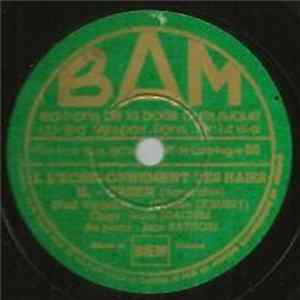
Tracklist
| 1 | Pour Que La Nuit Soit Propice |
| 2 | Le Tombeau Des Naiades |
| 3 | Pour Remercier La Pluie Au Matin |
| 4 | Bilitis |
| 5 | Les Contes |
| 6 | Le Pluie Au Matin |
| 7 | Six Epigraphes Antiques |
| 8 | Puor La Danseuse Aux Crotales |
| 9 | La Chevelure |
| 10 | La Danseuse Aux Crotales |
| 11 | Chant Pastoral |
| 12 | Pour Invoquer Pan, Dieu Du Vent D'etè |
| 13 | Le Souvenir De Mnasidica |
| 14 | Les Comparaisons |
| 15 | Trois Chants De Bilitis |
| 16 | Pour Un Tombeau Sans Nom |
| 17 | Pour L'egyptienne |
| 18 | Le Tombeau Sans Nom |
| 19 | L'Eau Pure Du Bassin |
| 20 | La Flute De Pan |
| 21 | Chanson |
| 22 | La Partie D'Osselets |
| 23 | Les Chanson De Bilitis |
| 24 | Les Courtisanes Egyptiennes |
Versions
| Category | Artist | Title (Format) | Label | Category | Country | Year |
|---|
| ARN 38 350 | Claude Debussy | Les Chansons De Bilitis De Pierre Louÿs - Six Epigraphes Antiques (LP) | Arion | ARN 38 350 | France | 1976 |
Album
Six épigraphes antiques, L. 131, CD. 139, is a suite of six pieces by Claude Debussy, originally written for piano duo. Completed in July 1914, the suite was Debussy's only completed composition that year. In 1915 Debussy transcribed them for piano solo. Much of the music over 100 measures is taken from the musical accompaniments he had written in 1901 for his friend Pierre Louÿs's erotic lesbian poems Les Chansons de Bilitis. In 1939 the Swiss conductor Ernest Ansermet created an orchestration of. HTML code. Album station. Bilitis Six épigraphes antiques: IV Pour la danseuse aux crotales. Bilitis Six épigraphes antiques: VI Pour remercier la pluie au matin. The Six épigraphes antiques began life as incidental music for a single performance of Debussy's friend Pierre Louÿs' Chansons de Bilitis. This Information. Work Title. Six épigraphes antiques. Name Translations. Six Épigraphes antiques 6つの古代墓碑銘. Name Aliases. Epigraphes antiques Épigraphes antiques 6つの古代エピグラフ. Debussy, Claude. OpusCatalogue NumberOp. This collection of. Les chansons de Bilitis. Claude Debussy. Released 1900. Not to be confused with the composers Trois chansons de Bilitis, this work is set for a speakingAlbum. Not to be confused with the composers Trois chansons de Bilitis, this work is set for a speaking read more . About Les chansons de Bilitis. About Les chansons de Bilitis 1 contributor. Kristian Lin. Not to be confused with the composers Trois chansons de Bilitis, this work is set for a speaking narrator, two harps, two flutes, and a celesta as opposed to just a voice and piano. It takes different poems by Pierre Louÿs for its text. Tap and hold to copy URL. Les chansons de Bilitis Tracklist. Chant pastoral Lyrics. Claude Debussy - Six Épigraphes Antiques, - III. Pour Que La Nuit Soit Propice. Claude Debussy - Six Épigraphes Antiques, - VI. Pour Remercier La Pluie Au Matin. The Nash Ensemble - Les Chansons De Bilitis For Narrator - X. La Danseuse Aux Crotales. Top artists. 7765 songs. In 1900, three years after the publication of his three songs, La Flûte de Pan, La Chevelure and Le Tombeau des Naïades, Claude Debussy wrote some little known incidental music to accompany the Chansons de Bilitispoems by Pierre Louys. The instrumental ensemble chosen at the time consisted of two flutes, two harps and a celesta. In 1913 he reworked the principal themes to make the' Six épigraphes antiques for four-hand piano. It seems interesting, and even natural, to present this' version of theSix épigraphes antiques as a faithful reproduction of the original colour. Difficulty gui. Achille-Claude Debussy Composer. 6 Épigraphes antiques, for piano 4-hands, Work. Stéphane Réty Flute, Nicolas Tulliez Harp. Chansons de Bilitis, Work. flûte de pan. The Six épigraphes antiques 1914 are actually a reworking of incidental music Debussy wrote for a single performance of 12 of Louÿs' Chansons de Bilitis - staged as a recitation with living tableaux - on February 7, 1901. In reworking the incidental score for two flutes, two harps, and celesta into the Épigraphes, Debussy retained only about half of the original music