








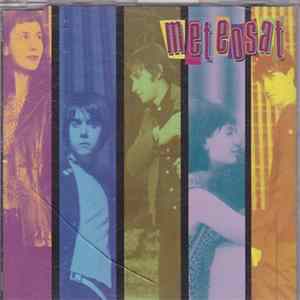
Tracklist
| 1 | Extraño Ser | 3:35 |
| 2 | Mi Novio Es Bakala | 2:39 |
| 3 | Metal S.A. | 3:50 |
| 4 | Vilma (Abreme La Puerta) | 2:22 |
| 5 | Radio España 2000 | 3:56 |
| 6 | Fiesta En Mi Jardin | 4:00 |
Album
The Meteosat series of satellites are geostationary meteorological satellites operated by EUMETSAT under the Meteosat Transition Programme MTP and the Meteosat Second Generation MSG program. The MTP program was established to ensure the operational continuity between the end of the successful Meteosat Operational Programme in 1995 and Meteosat Second Generation MSG, which came into operation at the start of 2004 using improved satellites. The MSG program will provide service until the MTG. The Meteosat series of satellites are geostationary meteorological satellites which have been providing weather satellite data and images since 1977. Meteosat-11 is the prime operational geostationary satellite, positioned at 0 degrees and providing full disc imagery every 15 minutes. It also provides Search and Rescue monitoring and Data Collection Platform relay service. Listen free to Meteosat Meteosat Vilma Abreme La Puerta, Fiesta en mi jardín and more. 6 tracks 19:26. by sergeyprusakov Jun 4 via Android. That thing show us the Office of Satellite and Product Operations OSPO is part of the National Environmental Satellite Data and Information Service NESDIS. NESDIS is part of the National Oceanic and Atmospheric Administration NOAA, 4th last flight unit of the Meteosat Second Generation programme. Main mission: operational meteorology. Substantial contribution to climatology. 4th last flight unit of the Meteosat Second Generation programme. The new generation Meteosat satellites Meteosat 8 was operational on January 2004 has more advanced technical features compared to all the other first generation satellites. Meteosat 7 and previous Meteosat 5, 6 were moved over the Indian Ocean at 57. 5 East. Meteosat satellite is also used as trasponder of images taken by other worldwide meteorological geostationary satellites GMS, GOMS, GOES and it's so possible to have images of the whole Earth. The University of Wisconsin-Madison USA produces a fine global montage of all the images taken by all worldwide geostationary satellit. See which songs from which albums Meteosat played through the years. Meteosat Albums total. Browse Meteosat satellite system is an example of a very successful European endeavour. First designed in the early 1970s, the first model was launched in 1977, and the same design is expected to be in use until at least the end of 2003. The expected 26 years of operational service amply justifies the initial development effort. Meteosat-4, -5 and -6 were developed under the Meteosat Operational Programme which ran from 1983 to 1995, originally under the responsibility of ESA, then under the responsibility of EUMETSAT from 1986. Meteosat-7 was developed under the Meteosat Transition Programme of EUMETSAT. Meteosat Second Generation MSG Spacecraft Series. Spacecraft Launch Mission Status Sensor Complement Ground Segment References. The first generation Meteosat series Meteosat-1 to -7 of EUMETSAT is gradually being replaced by a second generation series MSG with a launch of the first satellite MSG-1 on Aug. 28, 2002, to be followed by three more satellites, ensuring operational continuity in GEO for at least 16 years. MSG-1 became Meteosat-8 on Jan. 29, 2004 when the mission was declared operational i. commencement of routine operations after the end of the commissioning phase