





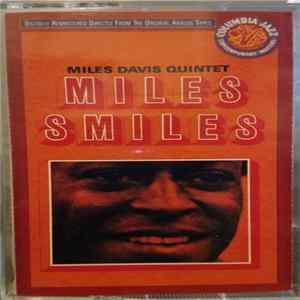
The Miles Davis Quintet - Miles Smiles FLAC
Tracklist
| 1 | Orbits | 4:37 |
| 2 | Circle | 5:51 |
| 3 | Freedom Jazz Dance | 7:16 |
| 4 | Dolores | 6:25 |
| 5 | Footprints | 9:53 |
| 6 | Ginger Bread Boy | 7:45 |
Versions
| Category | Artist | Title (Format) | Label | Category | Country | Year |
|---|---|---|---|---|---|---|
| CS 9401 | Miles Davis Quintet | Miles Smiles (LP, Album) | Columbia | CS 9401 | US | 1967 |
| CS 9401 | Miles Davis Quintet | Miles Smiles (LP, Album, RE, 180) | Columbia | CS 9401 | US | 2014 |
| PC 9401 | Miles Davis Quintet | Miles Smiles (LP, Album, RE) | Columbia | PC 9401 | US | 1994 |
| BPG 62933, 62933 | Miles Davis Quintet | Miles Smiles (LP, Album, Mono) | CBS, CBS | BPG 62933, 62933 | UK | 1967 |
| 62933 | Miles Davis Quintet | Miles Smiles (LP) | CBS | 62933 | UK | 1967 |
Credits
- Bass – Ron Carter
- Drums – Tony Williams
- Piano – Herbie Hancock
- Producer – Teo Macero
- Reissue Producer – John Snyder
- Remastered By [Remastering], Remix – Vic Anesini
- Tenor Saxophone – Wayne Shorter
- Trumpet – Miles Davis
Notes
Remixed and Digitally Remastered at Sony Music Studios, N.Y.C.
Barcodes
- Barcode (UPC): 07464488494
Video
Album
Miles: The New Miles Davis Quintet - Miles Davis. Лента с персональными рекомендациями и музыкальными новинками, радио, подборки на любой вкус, удобное управление своей коллекцией. Miles Smiles is an album by jazz musician Miles Davis, released in January 1967 on Columbia Records. It was recorded by Davis and his second quintet at Columbia 30th Street Studio in New York City on October 24 and October 25, 1966. It is the second of six albums recorded by Davis's second great quintet, which featured saxophonist Wayne Shorter, pianist Herbie Hancock, bassist Ron Carter, and drummer Tony Williams. With their second album, Miles Smiles, the second Miles Davis Quintet really began to hit their stride, delving deeper into the more adventurous, exploratory side of their signature sound. This is clear as soon as Orbits comes crashing out the gate, but it's not just the fast, manic material that has an edge - slower, quieter numbers are mercurial, not just in how they shift melodies and chords, but how the voicing and phrasing never settles into a comfortable groove. This is music that demands attention, never taking predictable paths or easy choices. Its greatest triumph is. Completa la tua Collezione su Miles Davis Quintet. Bass Paul Chambers Drums Philly Joe Jones Piano Red Garland Tenor Saxophone John Coltrane Trumpet Miles Davis Recorded- November 16, - The Miles Davis Quintet, Miles Davis Nonet, Miles Davis Nonet, Miles Davis Quintet. Miles and Shorter of course make a formidable frontline, and Shorter is also an incredibly good composer. Much of the bands material was written by Wayne. This 1966 album is the second that Miles Second Great Quintet released, after the important, if relatively under-developed . This album took the ideas first presented on that album, and built upon them. I believe this classic, recorded over two October days, may be the Second Great Quintets best. The band had grown closer to each other musically, and meshed better as a band. The recordings from 1965 to 1968 from Miles band are probably the best around for getting fans of fusion into acoustic jazz. The Best Of The Miles Davis Quintet 1965-1968 - Miles Davis. On Miles Smiles, despite the band leader's period of personal setbacks and health, his band is playing music which is characterized by its exploratory and expansive nature. All things considered, this is a delicately great album, both unusual and tender in its art. Another indication of the band's stellar qualities as composers and performers are each band members' solo recordings from the period during Miles' hiatus, now considered to be classics, starting from Herbie Hancock's Maiden Voyage Blue Note, 1965, Wayne Shorter's Speak no Evil and Juju Blue Note, 19. Miles Smiles is, in a lot of ways, the last hurrah of superlative acoustic offerings by Davis it was the end of an era, and right before Davis started experimenting with electronic sound. Recorded in 1966, it was right before the psychedelic period of that turbulent decade- a period of experimentation. Anyway, this album is absolutely in Miles' top ten of all-time. At times mezmerizing with its fast pace, and at other times deeply intellectual and slower, it has something for everyone in the realm of freebop. The track CIRCLE is piano-driven, and has a BLUE AND GREEN feel to it, Kind of